Why Children Adapt Fast and Parents Struggle in Standard 1
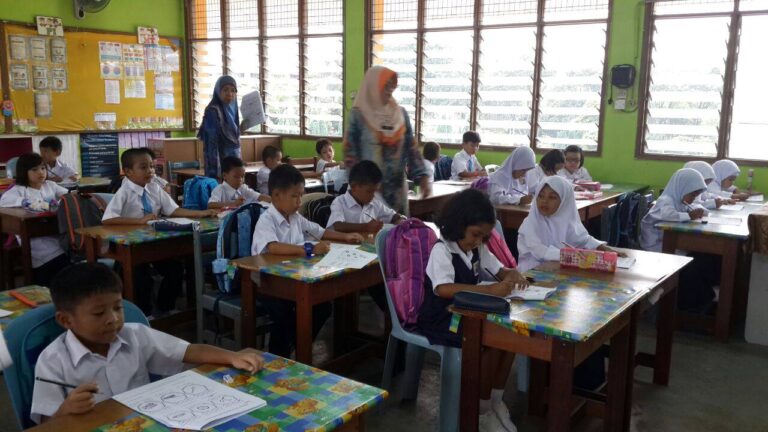
The first day of Standard 1 is often described as a milestone for the child—new uniforms, oversized school bags, and a nervous walk into a much bigger classroom.
But if you stand at the school gate long enough, you’ll notice something else.
The real transition crisis isn’t happening inside the classroom.
It’s happening among the parents standing outside.
At Zekolah, we’ve observed this across SJKC and SK families year after year. Children adjust more quickly than expected. Parents, however, feel unsettled, anxious, and quietly overwhelmed.
This isn’t because parents are weak or overprotective.
It’s because the Malaysian primary education system today no longer looks like the one parents grew up with—and no one explicitly prepares them for this shift.
The First Shock: When Parents Lose Their Reference Point
Most parents rely on their own schooling as a guide. You remember Standard 1 as simple—learning alphabets, copying words, doing basic sums.
Then you open your child’s Standard 1 workbook. Suddenly, the questions are different.
Instead of memorising, children are asked to explain, apply, and think. This is the result of KSSR, which integrates KBAT (Kemahiran Berfikir Aras Tinggi) from the very beginning of primary school.
Parents often pause and think:
“This wasn’t how I learned.”
“Am I supposed to teach this?”
“What if I explain it wrongly and confuse my child?”
This creates what we call the information gap. Parents want to help, but they are no longer confident their methods are correct. The stress comes not from the child’s weakness—but from the parent’s uncertainty.
From Play-Based Learning to Assessment—Without Exams
Another major shock for parents is the disappearance of exams.
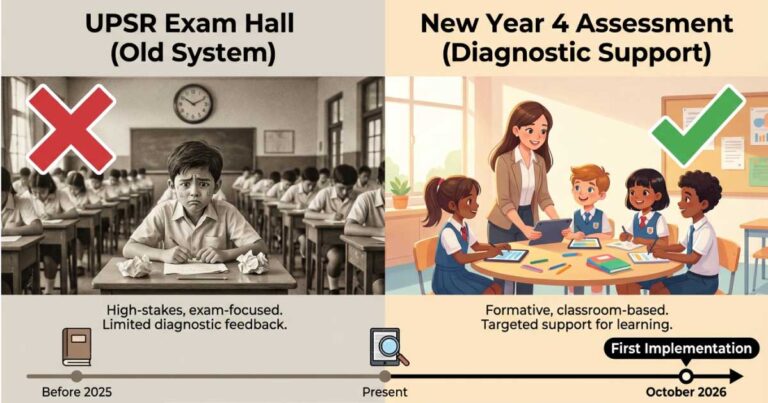
For Tahap 1 (Standard 1–3), formal mid-year and final exams have been replaced by Pentaksiran Bilik Darjah (PBD). Assessment now happens continuously through classwork, observation, and daily learning activities rather than high-stakes tests.
For children, this is far less intimidating.
For parents, it can feel deeply disorienting.
“There’s no mark.”
“No class ranking.”
“How do I know if my child is doing well or falling behind?”
Without familiar numbers, parents often feel like they are flying blind.
Under PBD, progress is described through Tahap Penguasaan (TP) levels. While these guide teachers, parents often mentally translate them: early TP levels signal that a child is still building foundations; middle levels suggest they are coping safely; higher levels indicate mastery and application.
The adjustment isn’t learning a new system—it’s trusting qualitative feedback over quantitative scores.
In the past, report cards offered certainty. Today, observation, feedback, and gradual progress take their place. For most Standard 1 children, this slower, less pressured approach builds confidence rather than undermining it.
The Emotional Transition Parents Don’t Expect
Standard 1 is not just an academic shift—it’s an emotional one for parents.
In kindergarten, communication with teachers is close. Updates are frequent, problems are shared early, and parents feel involved.
Standard 1 changes this overnight.
In an SJKC or SK classroom of 30–40 students, communication becomes formal. Children are expected to manage belongings, follow routines, and speak up for themselves.
Parents struggle with this loss of control more than children do.
“Did they remember their water bottle?”
“Did they bring the right books?”
“What if they’re too shy to ask the teacher?”
Letting go feels risky, especially as academic foundations are just beginning to form.
SJKC and SK Parents: Different Contexts, Same Anxiety
Although SJKC and SK operate in different language environments, parental worries are similar.
SJKC parents often stress over Mandarin proficiency, writing speed, and early peer comparisons. SK parents commonly worry about Bahasa Melayu literacy, discipline, and whether their child is coping independently.
Different concerns, same underlying fear:
“Is my child really okay—and how would I even know?”
What Children Are Actually Going Through
While parents worry about systems, assessments, and whether their child is “keeping up,” most Standard 1 children are focused on something much simpler: routines, friendships, and understanding what is expected of them each day. They are learning how school works before worrying about how well they perform.
For many children, this stage involves an early shift from play-based learning to more structured tasks. Instructions are longer, attention spans are stretched, and they are expected to sit, listen, and complete work more independently than they ever did in kindergarten. This quiet but important transition is explored further in From Playtime to Pressure: Why Your Child Struggles in Standard 1 and How to Help, which looks at why learning can suddenly feel harder even when children seem to be coping on the surface.
Children don’t measure progress through rankings or percentages. They measure it through small wins—finishing a task, following instructions correctly, remembering classroom routines, or receiving encouragement from their teacher. These moments build confidence far more effectively than marks at this stage.
What children need most in Standard 1 is stability, not pressure. Calm, consistent parenting gives them emotional safety. When anxiety enters the picture—often unintentionally—it is usually absorbed by the child, even when nothing is said aloud.
How Parents Can Support Without Overreacting
Supporting a Standard 1 child doesn’t require intensity—it requires alignment.
Home practice should reinforce what is taught in school, not overwhelm the child. Short, focused revision based on the Standard 1 textbook helps consolidate learning and builds confidence. Textbook-aligned exercises and carefully selected past-year–style questions, such as those available in Zekolah’s Standard 1 library, give parents clarity on syllabus expectations without guesswork.
At this stage, routine matters more than volume. A predictable homework and reading time reduces resistance, emotional fatigue, and nightly power struggles.
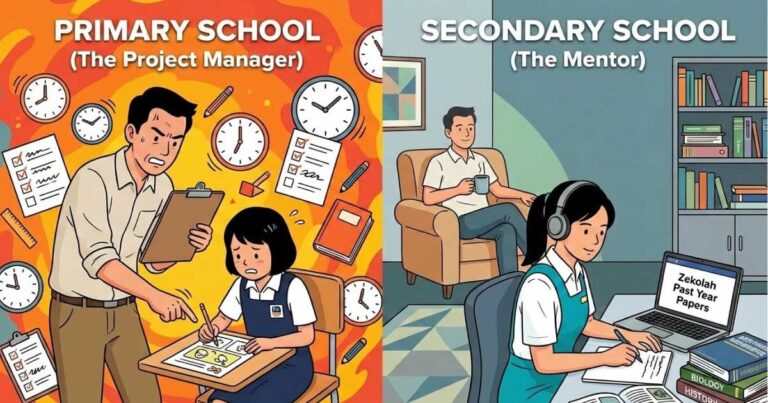
Equally important is empowering independence. Simple checklists for packing school bags or preparing books allow children to practise responsibility in a safe, guided way—skills they will rely on even more when they reach Standard 4 and beyond, where academic demands increase significantly.
Moving Forward with Confidence
The Standard 1 transition is not only a milestone for your child—it is a transition for you as a parent. The struggle you feel does not mean something is wrong. It comes from care in a system that has evolved beyond what you experienced.
By shifting focus from results to readiness, from control to guidance, this phase becomes calmer and more meaningful. You don’t need to navigate KSSR, KBAT, and PBD alone. With understanding, aligned resources, and steady expectations, confusion turns into confidence.
Your child doesn’t need a perfect parent in Standard 1.
They need a steady one—and that is exactly what you are becoming.