Why Form 1 Science Feels Harder Than Primary School
For many Malaysian parents, the transition from Standard 6 to Form 1 seems smooth — until the first Form 1 Science syllabus arrives. Topics that once seemed straightforward, such as plants, animals, and simple materials, now expand into abstract concepts like matter, energy, cellular processes, and laboratory safety.
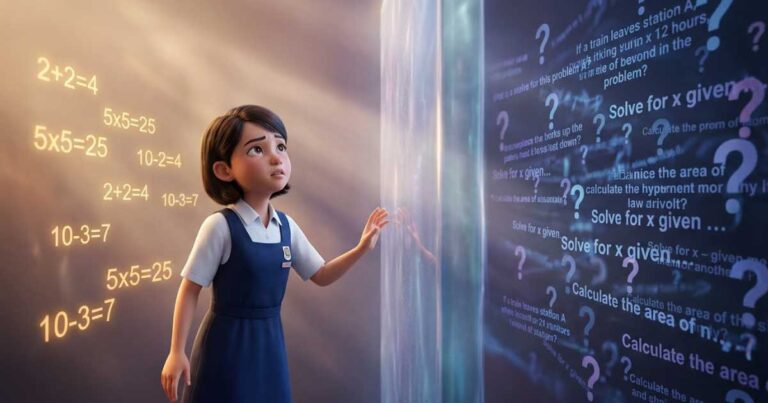
This shift often leaves students overwhelmed and parents unsure how to help. The difficulty is not simply that Form 1 Science is harder. What students face is a phenomenon educators call the Science Lab Gap — a subtle but significant shift in how Science is taught, assessed, and expected to be applied.
From Observation to Scientific Reasoning
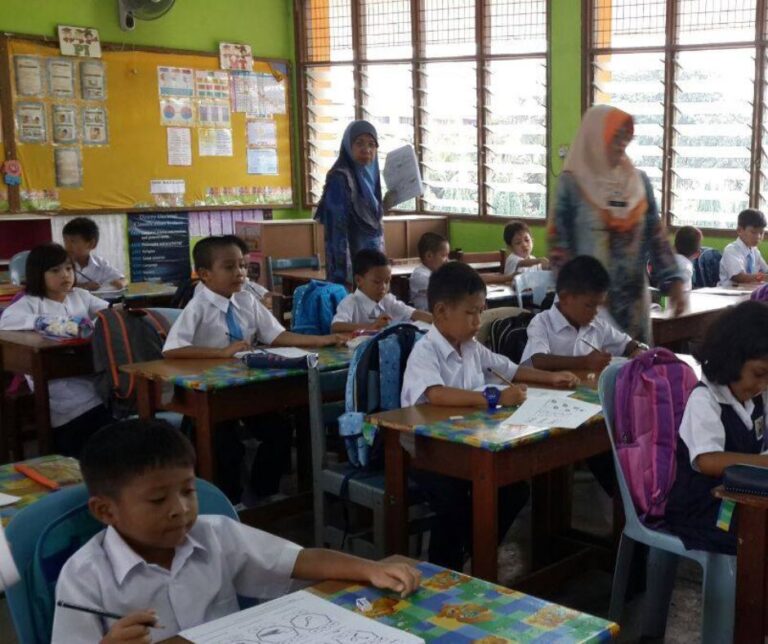
In primary school, Science is largely observational. Students notice, describe, and recall phenomena in the world around them. Lessons focus on tangible examples, such as life cycles, magnetism, or basic chemical reactions. Marks typically reward correct observation and memorization, and partial understanding often earns partial credit.
Form 1 Science, however, emphasizes scientific reasoning and abstract thinking. Students are expected to move beyond describing what they see to explaining why it happens. A leaf is no longer just green; it is part of a system where photosynthesis, energy transfer, and cellular respiration occur.
Students must identify patterns, analyze results, predict outcomes, and justify conclusions. Many appear to understand the content but struggle to communicate reasoning in the way Form 1 Science requires. This is the essence of the Science Lab Gap.
Tip for Parents: Encourage your child to verbalize explanations of simple phenomena at home. Asking “why do you think this happens?” develops reasoning skills beyond observation.
The challenges in Form 1 Science are part of a wider pattern many parents notice when children move from Standard 6 to secondary school. For a detailed look at why students struggle despite strong primary performance and how secondary expectations differ from primary school habits, see “Why Your Child Is Struggling in Form 1 After Doing Well in Standard 6.”
Laboratory Skills and Practical Application
The physical environment changes dramatically. Form 1 students enter dedicated Science laboratories with Bunsen burners, evaporating dishes, and chemical reagents. Laboratory safety, precision, and adherence to the scientific method become essential.
While primary school experiments are guided and structured, Form 1 expects students to conduct investigations independently. The lab combines conceptual understanding with practical application, requiring careful observation, accurate measurement, and logical reasoning. Early struggles often arise not from lack of knowledge, but from difficulty integrating theory and practice in a structured laboratory setting.
Tip for Parents: Observe your child practicing simple experiments at home and ask them to explain the steps and results. This builds confidence and lab familiarity.
Shifting Assessment Expectations
Assessment in Form 1 Science differs significantly from primary school. Marks are awarded based on structured reasoning and proper use of scientific terminology. Students must link observations to principles, explain cause-and-effect relationships, and present answers logically.
A conceptually correct response may still be marked incomplete if it lacks reasoning or terminology. This change is why even confident students can feel blindsided by early Form 1 marks.
Tip for Parents: Review Past Year Papers with your child and discuss how answers could be improved. Focus on structure and reasoning, not just correctness.
Bridging the Gap Through Past Year Papers
Bridging the Science Lab Gap requires consistent, focused practice with Secondary Past Year Papers. These papers expose students to the style, language, and expectations of Form 1 assessments. They also train students to recognize command words such as “explain,” “analyze,” and “predict,” which are central to secondary evaluation but rarely emphasized in primary assessments.
Structured practice with Past Year Papers helps students:
- Familiarize themselves with secondary exam question styles.
- Structure answers logically and use precise scientific terminology.
- Reinforce foundational concepts from primary school while applying them to reasoning-based questions.
Tip for Parents: Use Past Year Papers diagnostically. Identify topics where your child struggles, then guide them in reasoning through similar questions until confidence improves.
For parents looking for a ready-to-use resource, Zekolah’s library of Secondary Past Year Papers provides curated, exam-focused questions that make this practice simple and effective. Early exposure allows students to identify gaps, adapt to secondary-style reasoning, and approach lab-based questions with confidence.
Language and Conceptual Clarity
For students in SJKC or other multilingual contexts, an additional challenge is expressing reasoning clearly in the language of instruction. Even when concepts are understood, conveying them accurately in written answers can be difficult. Regular practice with Past Year Papers ensures students develop both conceptual understanding and communication skills necessary for exam success.
Tip for Parents: Encourage your child to write answers in full sentences, explaining reasoning clearly. Review and discuss answers together to improve clarity.
Turning Challenges Into Growth
The Science Lab Gap is not a sign of weakness or inability. It represents a natural progression from guided observation in primary school to independent, structured application in secondary school. Recognizing this gap allows parents to provide support that strengthens scientific thinking, reasoning skills, and laboratory confidence.
Primary and Form 1 Science are not entirely separate subjects; they are stages of the same journey. Primary Science builds curiosity and observation skills, while Form 1 emphasizes reasoning, analysis, and application. The Science Lab Gap exists because teaching and assessment focus shifts at this point.
Parents who understand this transition and provide structured support through Secondary Past Year Papers enable their children to bridge the gap successfully. Early preparation reduces stress, builds confidence, and turns the Form 1 Science experience into a foundation for continued success in all future years of study.
Final Tip: Treat early struggles as information, not failure. With guided practice and understanding of expectations, children can navigate the Science Lab Gap confidently.