No UPSR? Here’s How to Help Your Child Succeed in Secondary School
Since the UPSR was abolished in 2021, many parents have been left wondering how to prepare their children for the transition from Standard 6 to Form 1. For years, the path was simple: score well in UPSR and move on. Now, without a national exam to benchmark readiness, it’s natural to ask: “How do I know if my child is truly ready for Form 1?”
The shift away from UPSR is a positive step — it reduces exam pressure and encourages students to grow through meaningful learning rather than memorising for a single test. But without those familiar “A’s” to guide you, the road ahead can feel unclear.
This article will explain the new assessment system, highlight the key challenges in the Form 1 transition, and provide practical steps parents can take to ensure their child enters secondary school confident and prepared.
The New Assessment System: PBD and UASA
The Ministry of Education (MOE) replaced UPSR with School-Based Assessment (PBS), focusing on holistic development rather than one exam.
Students’ readiness for Form 1 now comes from a combination of:
1. PBD (Pentaksiran Bilik Darjah / Classroom Assessment)
This is an ongoing check of your child’s learning through quizzes, group projects, class participation, and daily observations. Schools may use different reporting formats — some use mastery levels (TP1–TP6), while others may report grades or percentages. The goal is to track consistent learning and progress rather than focus on one test day.
2. UASA (Ujian Akhir Sesi Akademik / End-of-Year Test)
This school-based exam provides a snapshot of your child’s understanding at the end of the year. UASA is administered by individual schools, following MOE guidelines, and may differ in format and difficulty between schools. Together with PBD, UASA helps teachers and parents understand a student’s readiness for Form 1 based on steady progress, not one-off exam results.
The Form 1 Transition: Three Key Challenges
Moving from primary to secondary school is a big step. Without UPSR as a guide, parents need to watch for three main challenges:
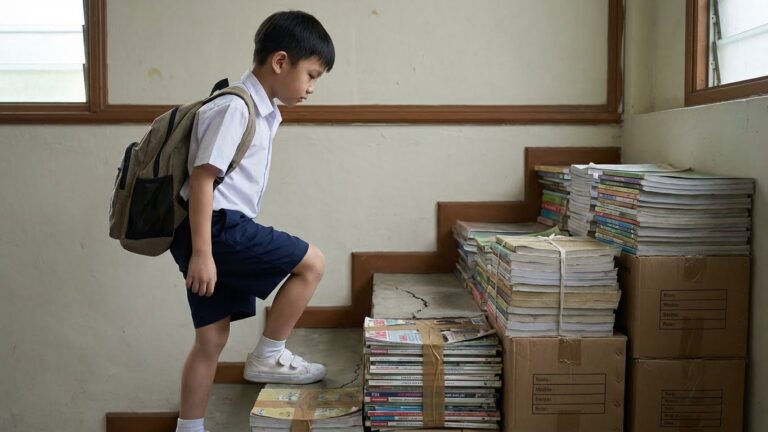
1. Subjects Become More Complex
Secondary school subjects demand more problem-solving and application. Maths and Science now focus on concepts and critical thinking rather than memorisation. History (Sejarah) and Geography are taught fully in Bahasa Melayu (BM), requiring strong reading and writing skills.
2. Bahasa Melayu Challenges for SJKC Students
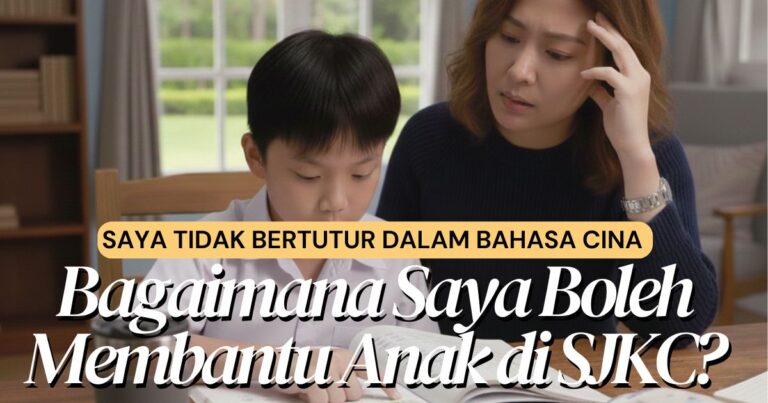
Students coming from Chinese primary schools may face a language adjustment. Schools may provide additional support or placement in language-focused classes depending on BM performance in UASA. Parents are advised to discuss with teachers about the school’s approach to ensure their child receives adequate support. Heavy subject loads in BM, including Sejarah and Geografi, make language skills essential for academic success.
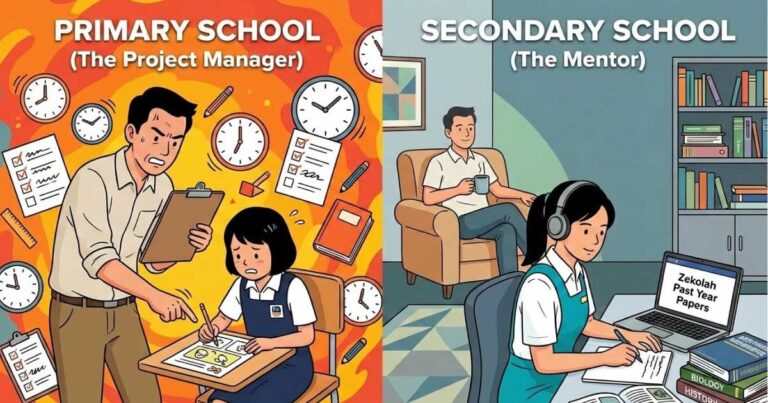
3. Learning to Work Independently
Primary school students are often closely guided by teachers and parents. In Form 1, students need self-discipline, organisation, and consistent effort. They must manage multiple subjects, different teachers, and more complex assignments. Success now comes from steady, year-long effort rather than last-minute studying.
Practical Steps for Parents
Even without UPSR, parents can actively support their child’s readiness for Form 1:
1. Focus on Mastery, Not Scores
Shift the conversation from grades to skills. Ask, “What new concept did you practice today?” rather than, “What grade did you get?” For Maths and Science, ensure your child can solve problems using concepts learned. For languages, encourage reading books, watching or listening to the news, and discussing current events in BM and English to build vocabulary and comprehension.
2. Identify and Address Weaknesses
The foundation built in primary school is crucial for success in secondary school. Weaknesses left unaddressed can grow into gaps in Form 1. Structured practice materials aligned with the syllabus can make a big difference. For parents looking for support, Zekolah offers past year papers and exercises designed to follow the school syllabus. Using these resources can help children strengthen key skills and feel more confident when approaching UASA and other school-based assessments.
3. Build a Secondary School Routine
Develop independent study habits early. Children should have at least 60–90 minutes of focused solo study daily. Discuss assessment results with teachers to track progress and understand which skills need improvement. Knowing what is required to improve mastery levels or grades ensures guided, targeted learning.
Why This System Can Be Beneficial
While the absence of UPSR may feel unsettling, the new system encourages deeper, ongoing learning. Children develop independence, critical thinking, and problem-solving skills. Teachers have more flexibility to teach creatively, and students focus on understanding rather than memorising for a single exam.
With early support, consistent practice, and careful monitoring, children can thrive academically and personally throughout secondary school despite the absence of UPSR.
Confidence Comes From Consistent Effort
The end of UPSR does not mean the end of preparation. Children who succeed are those who embrace steady learning, develop strong foundations, and adapt to new challenges. By focusing on overall growth, identifying weaknesses early, and building independent study habits, your child can start Form 1 confident, capable, and ready for the journey ahead.