Why Your Primary School Parenting Won’t Work in Secondary School
The move from Primary 6 to Form 1 can feel harder for parents than for the students themselves. For years, you may have been the “Project Manager” of your child’s studies—checking homework, making sure tasks are done, and drilling them on spelling or math. That approach worked in primary school, but in secondary school, the same hands-on energy can create tension and frustration.
At Zekolah, we’ve guided thousands of families through this change. The Malaysian secondary syllabus requires higher-order thinking (KBAT) and self-discipline—skills that can’t be taught simply by telling your child what to do. Your role needs to evolve: from doing everything for them, to mentoring and guiding them to take charge of their own learning.
Understanding the “Culture Shock” of Secondary School
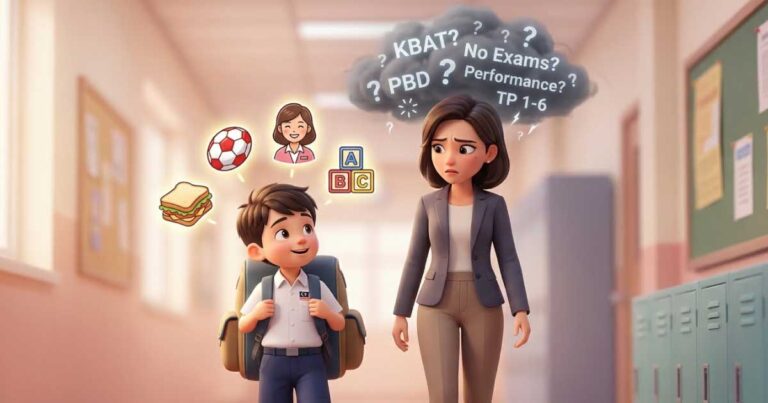
The leap from primary to secondary isn’t just about heavier workloads. Students also face a real shift in language, exam formats, and syllabus structure. Many subjects are now taught entirely in BM, and exams require critical thinking rather than rote memorization. This can feel like a “culture shock” for both students and parents, especially if your child was used to a bilingual learning environment or a more guided primary system. Recognizing this change helps parents understand why their child may struggle at first—and why a different approach is needed.
The “Middle Management” Trap
In primary school, success often meant following instructions: Did your child finish the work? Was it correct? In secondary school, the goal changes to competence—being able to handle tasks independently.
Subjects are harder, and the workload is heavier. Hovering over every Science experiment or Sejarah essay can make your child feel they can’t handle it on their own. This can lead to “learned helplessness,” where students wait for parents to guide every step.
Instead, let your child take charge of their learning. Your job is to give them the tools and guidance to solve problems themselves, not to fix every mistake.
From Directing to Questioning
Parenting a secondary student is less about telling them what to do and more about asking helpful questions. This encourages your child to think about their learning, which is important for the KSSM syllabus.
Compare the approaches:
- Primary Style: “Do your Math exercises now.”
- Secondary Style: “You have a Math test on Thursday. How will you study the chapters that were hard last week?”
This puts responsibility on the student. If they don’t know how to answer, that’s your chance to guide them to the right resources. Directing them to Zekolah’s Past Year Papers allows them to practice independently, identify their weak areas, and develop the skills they will need in the later years of secondary school.
Scaffolding, Not Hovering
Independence doesn’t mean leaving your child alone. They still need a safety net, but it should be built from resources, not reminders.
Subjects like Reka Cipta, Advanced Mathematics, or integrated Science are harder and more abstract. Instead of sitting with your child to solve problems, make sure they have access to good materials. A “Consultant Parent” guides rather than gives answers:
“I see you are having trouble with this type of question. Maybe looking at Past Year Papers will help you see what the examiners are asking.”
For secondary students, Zekolah offers Past Year Papers that match the exam format and syllabus. Practicing these papers helps your child build confidence and develop the “study muscle” they will need for SPM or UEC.
Redefining Support in Secondary School
Support now is more about the environment than the tasks. Secondary students have heavier workloads, more social pressure, and new routines. You can help by:
- Focusing on Effort: Praise their study habits and problem-solving, not just grades.
- Helping with Resources: Make sure they have syllabus-accurate materials to save time.
- Being Available: Let them talk to you when stressed, without immediately fixing their problems.
This builds confidence, independence, and resilience—skills they need for long-term success.
Practical Steps for Parents
This week, try observing your child’s study routine without stepping in to do the work for them. If you notice they are struggling, encourage them to attempt the questions on their own first. You can guide them toward helpful resources, such as Zekolah’s Past Year Papers, for extra practice. Instead of correcting every mistake, show them how to check their answers and reflect on what went wrong. This approach helps your child learn to take responsibility for their own learning—an essential skill for success in secondary school.
Mentor, Don’t Manage
Parenting a secondary student means changing your approach. You are no longer the manager; you are a mentor and guide. By stepping back and providing the right tools, you give your child space to grow academically and emotionally.
Secondary school is a chance to build lifelong learning habits, not just grades. With the right guidance and resources—like Past Year Papers from Zekolah—you can help your child feel confident, independent, and ready to face new challenges.
It’s not about doing less for them—it’s about doing the right things differently.