Why Your Child Is Struggling in Form 1 After Doing Well in Standard 6
Every year, the pattern repeats.
A student completes Standard 6 with solid UASA results. Confidence is high. Parents feel reassured. Then, just weeks into Form 1, small issues begin to surface. Homework is “forgotten.” Test scores dip. Teachers seem less communicative. Parents are left wondering what went wrong.
“But my child was doing well before.”
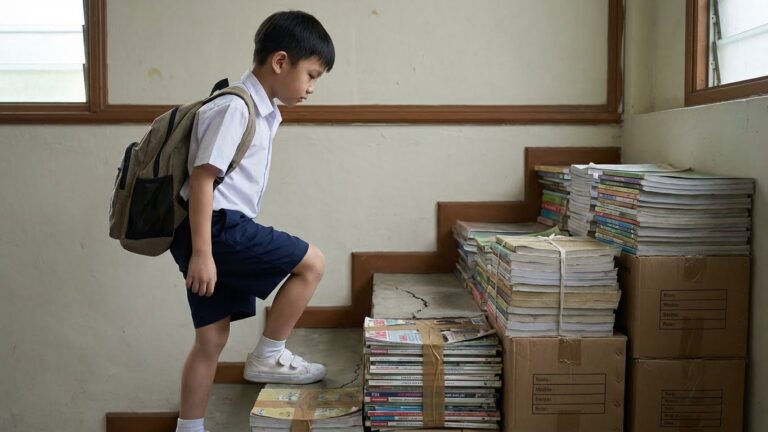
The truth is uncomfortable but important: secondary school is not just harder — it operates on assumptions that are never explicitly taught. These assumptions form a hidden syllabus that determines whether a student copes smoothly or struggles quietly.
The real change isn’t the syllabus — it’s the silence
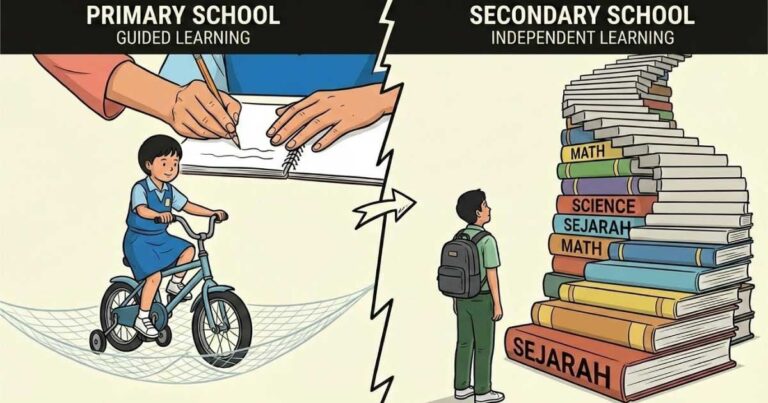
In primary school, learning is guided. Instructions are repeated. Teachers slow down when students look lost. Parents are looped in early.
In secondary school, the system becomes quieter.
Teachers move forward whether every student is ready or not. Silence is interpreted as understanding. Missing work is recorded, not chased. This is not because teachers don’t care — it’s because the system assumes students are already equipped to manage themselves.
This is where many capable students stumble. Not because they lack knowledge, but because readiness is no longer taught — it is assumed.
Assumption #1: Students can decode instructions the first time
One of the biggest hidden shifts is instruction compression.
Secondary teachers give fewer reminders and less explanation. Homework might be mentioned once, written briefly on the board, or embedded inside a verbal instruction. Teachers assume students can listen, extract the task, and act on it independently.
Many students don’t fail academically at this stage — they fail instruction decoding. They heard the teacher, but they didn’t register what mattered. In secondary school, that distinction is costly.
This is why parents often hear, “But the teacher never said!”
From the teacher’s view, they did — once.
Assumption #2: Students understand how marks are actually awarded
Another shock comes during tests.
Parents often assume low marks mean wrong answers. In secondary school, marks are frequently lost even when answers are mostly correct. Teachers assume students already know how to structure responses, show reasoning, and use precise terminology.
This marking logic is rarely explained in class. Students are expected to have absorbed it already.
The result? Students feel confused and unfairly judged, when in reality they are being assessed on how they answer, not just what they know.
This is one reason early exposure to real secondary past year questions matters. Past Year Papers reveal marking expectations clearly — not in theory, but in practice.
Assumption #3: Weaknesses will be fixed independently
In primary school, teachers slow down for weaker students. In secondary school, teachers teach past weaknesses, not through them.
If a student struggles with a concept, the assumption is that the student will revise, seek help, or catch up independently. The class does not pause.
Parents often misread this as teachers being indifferent. In reality, it reflects a core assumption of secondary education: self-repair is part of learning.
Without early intervention, small gaps quietly widen.
Assumption #4: No follow-up means no problem
One of the most misunderstood aspects of secondary school is the lack of follow-up.
Missed homework is recorded, not chased. Quiet students are assumed to be coping. Teachers often operate on a “no news is good news” basis.
This means struggles surface late — sometimes only after a major exam.
Parents who wait for warnings often realise too late that decline has been happening gradually. This is why experienced educators use Past Year Papers early, not for scoring, but as a diagnostic signal of readiness.
Assumption #5: Students can handle reduced reassurance
Finally, secondary school assumes emotional resilience.
Teachers expect students to receive low marks, process mistakes, and continue participating. Public correction, limited praise, and faster pacing are normal.
Some strong primary students respond not by failing loudly — but by withdrawing. They stop asking questions. They stop answering in class. Confidence drops before grades do.
This is a confidence penalty, not an ability issue.
Familiarity with exam-style questions helps reduce this shock. When difficulty is expected, it feels manageable.
What parents should do now
The solution is not to push advanced content earlier. It is to make expectations visible.
Talk less about “studying” and more about how questions are approached. Let your child attempt real secondary exam questions without pressure to score well. Discuss why marks are lost, not just which answers are wrong. Allow small failures while staying emotionally steady.
Zekolah’s Secondary Past Year Papers are often used in this way — not as a final test, but as a window into what secondary teachers already assume.
Early struggle is information, not failure
When Form 1 feels harder than expected, it is rarely because a child is incapable. It is because the rules changed quietly.
Once parents understand the hidden syllabus of secondary school, they can support their child with clarity instead of anxiety.
Secondary success begins when assumptions are no longer invisible.