From “Top Student” to “I Don’t Care”: What Really Breaks Motivation in Form 1
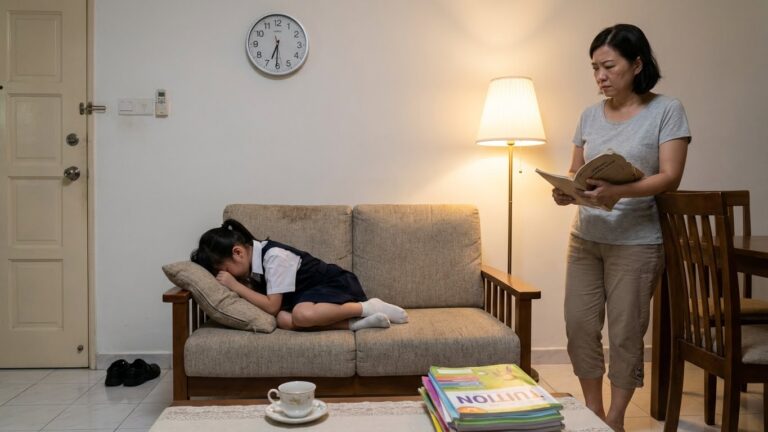
“Last year, my child was confident. This year, everything feels like a fight.”
This is a sentence many Malaysian parents quietly repeat once their child enters Form 1.
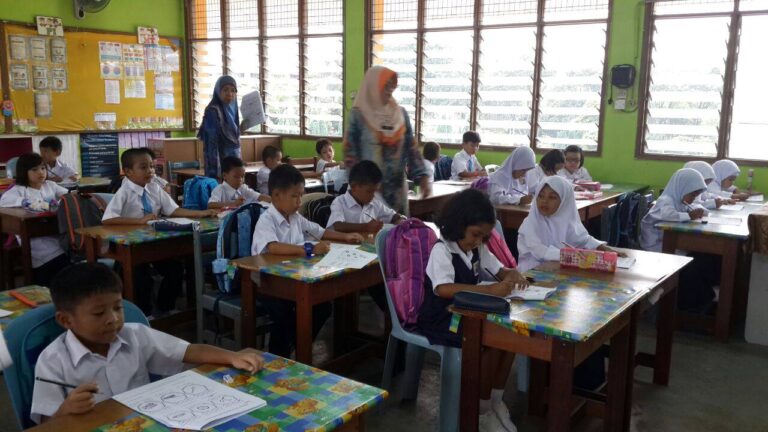
In Standard 6 (Tahun 6), your child may have performed consistently well—especially in an SJKC environment. Their Pentaksiran Bilik Darjah (PBD) showed Tahap Penguasaan (TP) 5 or 6. Teachers were familiar, expectations were clear, and effort usually led to predictable results. School felt manageable.
Then Form 1 begins.
Within months, parents notice unsettling changes. Homework is delayed or “forgotten.” Revision becomes shallow. When asked about school, the response is often a shrug or a flat “I don’t care.” What looks like an attitude problem is, in reality, a structural motivation break—one that is common, predictable, and fixable when understood early.
At Zekolah, we see this pattern across students from SJKC, SMK, and CIS backgrounds. This is not about intelligence or laziness—it is about a child losing their academic bearings in a system that changed faster than they were prepared for.
Form 1 Is Not Just Harder — It Is Unfamiliar
Many parents assume Form 1 is simply “more difficult” because of the subjects. That explanation is incomplete. What actually changes is how success works.
In primary school, students are closely guided. Teachers model answers, break tasks into small steps, and reward visible effort. Even when understanding is partial, students feel supported by a familiar structure.
In Form 1, that structure quietly disappears:
- Faster Pace: Lessons move faster to cover the extensive KSSM syllabus.
- Vague Instructions: Teachers expect students to infer expectations independently.
- Detailed Feedback Gap: Marks may be deducted without the extensive one-on-one explanation students were used to.
For a child who once felt competent, this shift is deeply unsettling. The rules of the game have changed, but no one clearly explains the new ones.
When “I Don’t Care” Is Really Self-Protection
Parents often hear:
“Why bother? I studied but still didn’t do well.”
This is a critical moment.
When effort no longer produces predictable results, students protect themselves emotionally. Disengagement feels safer than trying and failing again. For previously high-achieving students, this defense often shows up as indifference.
A common scenario: a student studies hard but receives a TP3 because they missed a KBAT keyword or did not use the right Komsas term in Bahasa Melayu. They feel defeated. “I don’t care” rarely means a child has stopped valuing learning; it means they no longer trust the system to reward their hard work.
The SJKC-to-SMK Transition: A Cognitive Load Parents Underestimate
For many SJKC students, Form 1 brings an additional, less visible challenge: language.
In primary school, core subjects like Science and Mathematics are often mastered in Mandarin. In Form 1, while some schools offer the Dual Language Programme (DLP), many subjects—Sejarah, Geografi, Reka Bentuk dan Teknologi (RBT), and Bahasa Melayu—are conducted fully in BM.
Students are now required to:
- Listen to lectures in a second or third language.
- Translate terms in their head.
- Understand complex new concepts (e.g., Zaman Air Batu, Sel Haiwan).
- Take notes simultaneously.
Missing a few keywords in fast-paced BM lessons quickly leads to gaps in understanding and mental fatigue, which parents often mistake for boredom or lack of interest.
When Old Study Methods Stop Working
The KSSM framework emphasizes KBAT (Kemahiran Berfikir Aras Tinggi) from Form 1 onwards. Many primary-school “top students” succeeded through memorisation and drilling. In secondary school, especially under the Ujian Akhir Sesi Akademik (UASA) format, answers must demonstrate application and reasoning.
Even diligent students may lose marks because:
- Answers lack structure
- Keywords are incomplete
- Concepts are recalled but not applied
This is often the moment a child quietly decides: “I’m not good at this anymore.” Once that belief forms, motivation fades quickly.
The “No Big Exam” Illusion
With UPSR and PT3 removed, some students assume the pressure is gone. Form 1 to Form 3 is seen as a “relaxed phase” before SPM.
In reality, these years build the foundation for language skills, study habits, and subject understanding. When disengagement starts early, Form 4 feels overwhelming, not challenging.
How Parents Can Help Motivation Recover
Motivation does not return through reminders or pressure—it returns when clarity and control are restored.
- Focus on comprehension, not grades: Ask your child to explain a Sejarah or Science topic in simple terms. If they can’t, it’s a comprehension issue, not laziness.
- Use aligned practice: Random worksheets frustrate students further. Practice that mirrors how topics are tested in KSSM builds confidence.
- Familiarize with the format: Exposure to Form 1 Past Year Papers helps students understand marking schemes, so exams feel predictable instead of mysterious.
Even small adjustments—like maintaining a glossary of key BM terms, encouraging independent study, or using the right study tools—can help a child regain control and interest in learning.
Zekolah’s role is not to push students harder but to help them realign with the system.
Our Past Year Papers and other exercises for SMK Form 1 reflect the current KSSM syllabus, giving students a low-pressure way to practice and understand exactly how content is tested. Many Form 1 students notice their studying “works” again, and motivation returns naturally—without added stress.
This Is a Transition, Not a Decline
Your child did not suddenly change—the system did.
Form 1 demands a new way of learning, but students are rarely taught how to adapt. When parents respond early—with understanding, structure, and the right support—the “I don’t care” phase becomes a temporary hurdle, not a permanent attitude.
Handled well, Form 1 becomes the foundation for independence, resilience, and long-term academic confidence—preparing your child to thrive in Malaysia’s competitive secondary school environment.